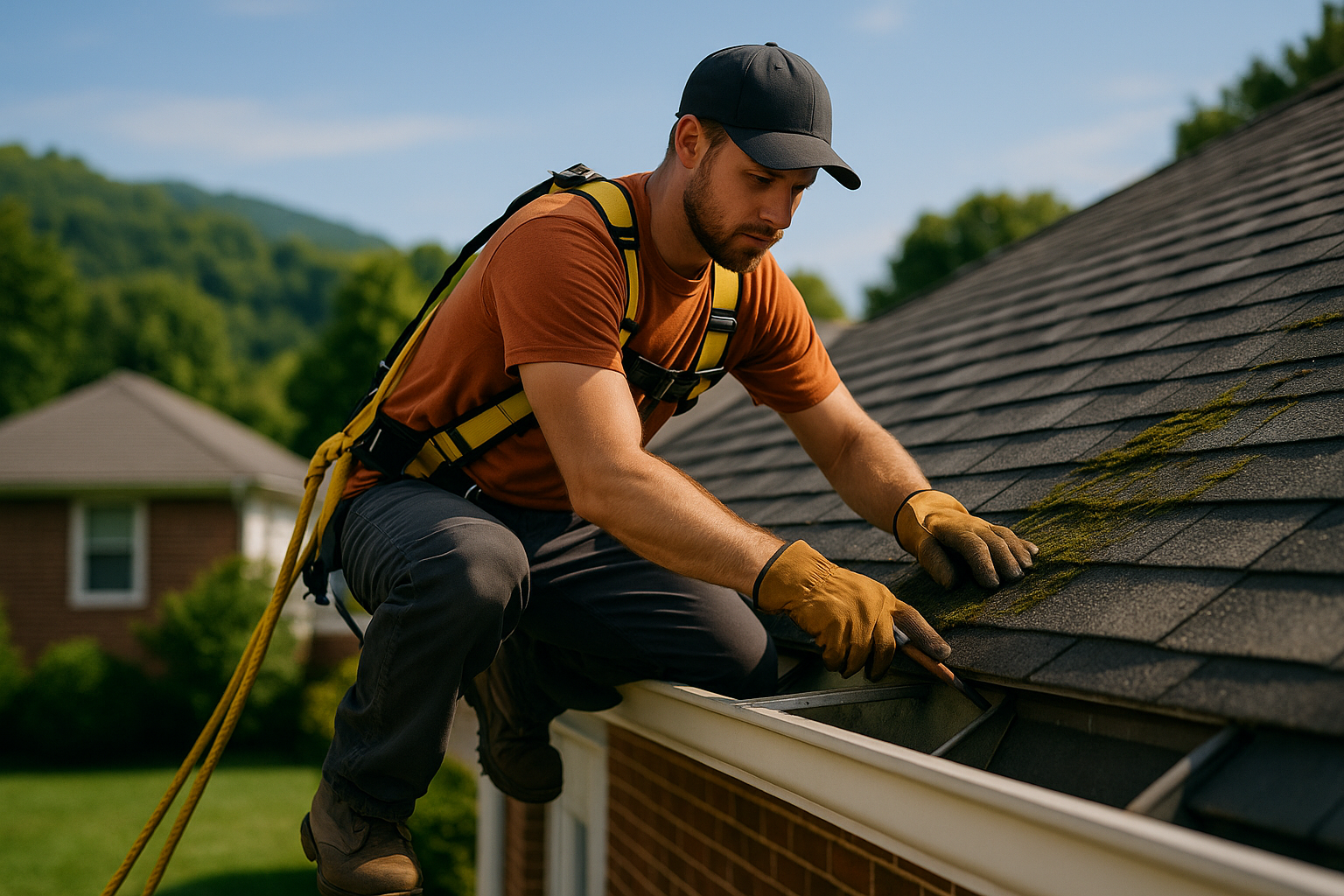
What causes moss growth on shingles in humid climates
Moss growth on shingles in humid climates occurs when moisture, shade, and organic debris combine to create ideal growing conditions. The spores attach to rough shingle surfaces, particularly in areas with poor air circulation and limited sunlight exposure.
Primary Factors Contributing to Moss Development
Several environmental conditions promote moss growth shingles humid climate prevention becomes essential. High humidity levels, which Asheville experiences during summer months with temperatures reaching 80-85°F, create the moisture foundation moss needs to thrive. When combined with the area's 47 inches of annual rainfall, roofs remain damp for extended periods.
Shaded roof sections under tree canopies are particularly vulnerable. North-facing slopes and areas blocked by nearby structures receive less direct sunlight, allowing moisture to linger. Organic debris like leaves, pine needles, and dirt accumulate in these spots, providing nutrients for moss establishment.
How Moss Damages Roofing Materials
Once established, moss creates a cycle of moisture retention that accelerates shingle deterioration. The plant's root system penetrates between shingle layers, lifting edges and creating entry points for water infiltration. This process is especially problematic in neighborhoods like Montford Historic District, where older homes may have aging roofing systems.
Moss also acts like a sponge, absorbing and holding rainwater against shingle surfaces. This prolonged moisture exposure can lead to granule loss, cracking, and premature aging of asphalt shingles. During winter freeze-thaw cycles, trapped water expands and contracts, further damaging roofing materials.
Effective Prevention Strategies
Preventing moss growth shingles humid climate prevention requires a multi-faceted approach focusing on moisture control and maintenance. Regular roof cleaning removes organic debris that feeds moss growth. Professional cleaning services typically charge $300-800 depending on roof size and complexity.
Tree trimming improves sunlight exposure and air circulation around the roof. Branches should maintain at least 6 feet of clearance from roofing surfaces. This strategy is particularly important in tree-dense areas like West Asheville, where mature canopies often shade residential roofs.
Zinc and Copper Strip Installation
Metal strips installed along roof ridges provide long-term moss growth shingles humid climate prevention. When rainwater flows over these strips, it carries metal ions that inhibit moss development. Zinc strips cost approximately $2-4 per linear foot installed, while copper strips range from $3-6 per foot.
These strips gradually release ions during rainfall, creating an inhospitable environment for moss spores. The treatment area extends roughly 15-20 feet down the roof slope from the strip location.
Professional Treatment and Maintenance
Established moss requires careful removal to avoid shingle damage. Professional treatment involves applying specialized cleaning solutions followed by gentle removal techniques. DIY attempts often result in granule loss or shingle breakage, making professional service worthwhile.
Regular gutter cleaning supports moss growth shingles humid climate prevention by ensuring proper water drainage. Clogged gutters create standing water and increase roof moisture levels, particularly problematic during Asheville's heavy summer precipitation periods.
Annual roof inspections help identify early moss development and address contributing factors before extensive growth occurs. Professional roofers can assess ventilation adequacy, identify problem areas, and recommend targeted prevention measures.
Frequently Asked Questions
- How quickly does moss grow on roof shingles in humid climates?
- Moss can establish within 6-12 months in ideal conditions, with visible growth appearing after one growing season in humid climates like Asheville's.
- Can I remove moss from shingles myself?
- While possible, DIY moss removal risks damaging shingles. Professional removal ensures proper techniques and cleaning solutions that won't harm roofing materials.
- Do zinc strips really prevent moss growth on roofs?
- Yes, zinc strips effectively inhibit moss growth by releasing metal ions during rainfall that create an inhospitable environment for moss development.
- How much does professional moss treatment cost?
- Professional moss treatment typically ranges from $300-800 depending on roof size, moss coverage, and treatment method required for complete removal.
- Will moss growth void my roof warranty?
- Moss growth itself typically doesn't void warranties, but damage from neglected maintenance or improper removal attempts may affect warranty coverage.
About the author: Matt Fowkes, Founder. Matt Fowkes founded the operator to connect homeowners with vetted local service professionals. He's spent over a decade studying how online directories and matching services work — what makes them trustworthy, what makes them fast, and why most fail homeowners.
More roofing guides for Asheville
Need roofing help in Asheville?
Get matched with a vetted local pro — free, no obligation.